
Development Communication as an Argument about Power

Development communication started in some ways as an argument about power. Who gets to define what "development" means. Who gets to speak. Who is only ever spoken to. What media are available to service a more balanced global information flow that goes both ways. Questions such as these were key to the development of this research area. The backdrop was the classic studies known as modernization studies, contrasted by the so-called Dependency School and the UNESCO-driven critique of global information imbalance from the 1980s.
For much of the twentieth century, the dominant model treated development as a one-way transfer. Information and technology flowed from the industrialized North to the so-called developing South. The assumption was simple and not always just implicit. Poverty was mainly a knowledge gap. Better media and better instruction would close it. That model has never fully gone away. But it has been challenged, again and again, by scholars and practitioners who insist on a different standard. Development that does not start from the dignity and agency of the people it claims to help is not development. It is a more polite form of dependency.
And then the US closed down its massive development aid program, others following suit. By 2026, massive health and education programs have been cut, and this at a time when crises increase. The US has been by far the largest development aid provider. The damages done are hard to estimate. It is equally hard to evaluate at which point "good development projects" deserving funding have been prevented from getting funding due to bad development projects getting the funds. There are plenty of those, and there are plenty of uncertainties as to what constitutes good development.
Staff members at the department of Global Development and Planning have in the past year spent considerable time creating a project framework to articulate more forcefully how development communication is more than a marginal reference in development studies. It is, in some respects, what development studies is, and does. On that note, the early modernization scholars like Daniel Lerner and Wilbur Schramm were not too off mark.
Poverty, Sovereignty, and the Limits of the Technology Fix
Poverty is not simply a lack of resources. It is often a lack of voice. People become recipients of programs designed elsewhere. They are measured against indicators set elsewhere. They are expected to be grateful for interventions they had no part in shaping. Educational technology inherits this risk directly. A platform, a curriculum, or a learning tool built in Oslo or Boston, then exported wholesale to a community that had no say in its design, repeats the oldest mistake in development practice. It mistakes the delivery of a tool for the transfer of power.
Sovereignty matters here in a concrete sense. Communities need a say over their own data. They need a say over curriculum content, language, and the pace of technological change. Without that say, they are being developed at. Not developed with. A serious development-communication-and-learning agenda has to treat this as a design constraint from the start. Not an ethical afterthought added once the technology already exists.
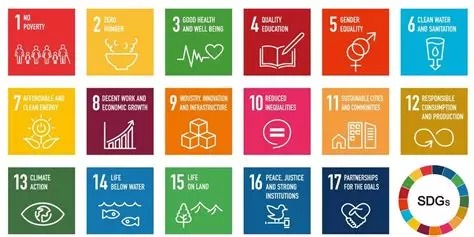
Hunger and health sit alongside poverty in this same frame. The UN's Sustainable Development Goals link them directly to education. There is a good reason for that. A hungry child does not learn the way a well-fed child learns. A community without functioning health information does not engage with formal schooling the way development planners often assume. Communication is the connective tissue running through all of these goals. Health promotion is, at bottom, an exercise in communication and learning. Food security programs succeed or fail partly on whether local knowledge is respected or overridden. Poverty-reduction strategies live or die on whether affected people are treated as informants or as authors. None of the SDGs on poverty, hunger, and health can be met by strategies that skip dignity and participation.
Freire and the Idea of Education as Freedom
No one made this argument more forcefully than Paulo Freire. Writing from and about Brazil, Freire rejected what he called the "banking model" of education. In that model, teachers deposit knowledge into students the way someone deposits money into an account. Students are passive receptacles. They are not active participants in their own learning. Freire proposed something different. A pedagogy of dialogue. Education as a joint act of naming the world. The learner is a subject with the capacity to analyze, question, and eventually transform their own conditions. Not an object to be filled or corrected.
This is what Freire meant by education as emancipatory. In his own literacy campaigns, literacy was never treated as a narrow technical skill of decoding letters. It was treated as critical consciousness, what he called "conscientização." That means the capacity to read one's own social and political situation as something made by human beings. And therefore something human beings can unmake and remake. Teaching someone to read a word without helping them read the world that word describes teaches compliance. Not freedom.
This has direct implications for educational technology, and for a Future Learning Lab research theme built around development and communication. It is entirely possible to build fast, well-designed, highly scalable edtech that still reproduces the banking model at digital speed. An app can deliver content. It can measure whether the correct answer was selected. It can report a completion rate upward to a funder. All without ever asking the learner what they wanted to know, or why. Freire's critique stands as a warning against exactly this pattern. That warning grows more urgent, not less, as AI-driven personalization makes it easier to deliver more content more efficiently, without ever building in a genuine two-way exchange.
An emancipatory approach to educational technology treats the learner as a co-author of the process. It asks what problem the learner and their community are actually trying to solve. It does not start from what the technology happens to be capable of measuring. It treats local language, local knowledge, and lived experience as starting points. Not obstacles to correct on the way to a standardized curriculum. And it holds itself accountable to more than completion rates and test scores. It asks whether people's actual capacity to act on their own behalf has grown. Their agency. Their voice. Their sovereignty over their own learning.
Where This Connects Back to Future Learning Lab

Future Learning Lab was built on a simple premise. No single discipline can own the question of educational technology by itself. The social science critique, the humanist interpretation, and the technological "how to" orientation all have to stay in contact for the work to be honest. A Global South facing, Freirean reading of development, communication and learning does not sit outside that founding logic. On the contrary, it sharpens it.
That fuller statement can be put simply. Technology does not, by itself, develop anyone. Communication does not, by itself, liberate anyone. What moves a community from dependency toward sovereignty is a specific kind of education. One that treats people as the subjects of their own development. Not the targets of someone else's. One willing to ask, in Freire's own terms, whether a given tool, platform, or curriculum helps people read the world. Or simply teaches them to accept it as it is.
